


Essential Jobs to Do in the Garden in Autumn

Autumn can make a garden look as if it is winding down, but this is one of the busiest and most useful times of the year. The soil is still warm, rain returns, weeds slow down, and plants begin to store energy for winter. A few steady jobs now can save hours in spring and help the garden come back stronger.
This is not about stripping everything bare. A good autumn garden is tidy enough to stay healthy, sheltered enough to support wildlife, and prepared enough to face frost, wind, and heavy rain.

Tidy the garden without clearing away all the shelter
A full autumn tidy can look satisfying, but it can also remove food and shelter that birds, insects, frogs, hedgehogs, and other garden wildlife rely on. The aim is to clear problem areas while leaving some useful mess in the right places.
Start with anything diseased. Remove leaves affected by black spot, rust, mildew, or blight, especially around roses, fruit trees, and vegetables. Do not compost badly diseased material unless the compost heap gets properly hot, as many home heaps do not. Bag it for green waste collection if your local service accepts it, or dispose of it as advised by your council.
Next, clear paths, patios, steps, and decking. Wet leaves are slippery, and they can block drains or stain surfaces. A stiff broom often works better than a noisy blower, especially in small gardens. Keep gutters clear too, as backed-up water can rot nearby timber and spill into borders where it is not wanted.
Leave some seedheads standing. Teasels, alliums, echinacea, fennel, ornamental grasses, and sunflowers bring structure to winter borders and food for birds. Hollow stems can also shelter insects. Cut back plants that have collapsed into paths or smothered neighbours, but leave the rest until late winter if they are not causing trouble.
A balanced autumn tidy might include:
Clearing diseased leaves from under vulnerable plants
Sweeping hard surfaces for safety
Cutting back soggy growth that has fallen over
Leaving seedheads and stems where they look good
Creating one or two quiet piles of leaves or twigs for wildlife
If leaves gather on the lawn, rake them up before they form a wet mat. Grass needs light and air, even in cooler months. In borders, a thin layer of leaves can act as a natural mulch, but thick piles around crowns of delicate plants may cause rot.
Make leaf mould and feed the soil
Autumn leaves are not waste. They are one of the easiest soil improvers a garden can produce. Leaf mould takes longer to break down than ordinary compost, but it creates a crumbly, moisture-holding material that works beautifully as a mulch, soil conditioner, or seed-sowing ingredient when it is fully rotted.
Collect leaves from lawns, paths, and drives. Avoid using lots of thick, leathery evergreen leaves unless you shred them first, as they break down slowly. Leaves from trees such as birch, beech, hornbeam, cherry, and lime usually rot down well.
The simplest method is to pack damp leaves into black bin bags, puncture the bags with a garden fork, tie them loosely, and stack them somewhere out of sight. You can also make a leaf mould bay with chicken wire and posts. Keep the leaves damp, not soaking wet. If they dry out completely, decomposition slows.
Compost heaps also need attention in autumn. Add the last of the soft green waste, spent annuals, vegetable tops, non-diseased plant trimmings, and kitchen peelings. Balance them with dry brown material such as shredded cardboard, dry leaves, straw, or woody prunings chopped small. A heap that is too wet and slimy needs more browns. A heap that is dry and inactive needs water and fresh green material.
Autumn is also a good time to mulch beds and borders. Spread well-rotted compost, leaf mould, or manure around plants after weeding and watering, leaving a little space around stems and trunks. Mulch helps protect soil from winter rain, reduces weed growth, and slowly feeds soil life.
Healthy soil is the quiet engine of the garden. Autumn is when you can feed it with the least effort and the biggest long-term gain.
Do not dig heavy clay when it is wet and sticky. Walking on it and turning it over can damage the structure. If soil is workable, remove deep-rooted weeds and add organic matter on top. Worms and winter weather will pull it in over time.

Look after the lawn, pond, and garden structures
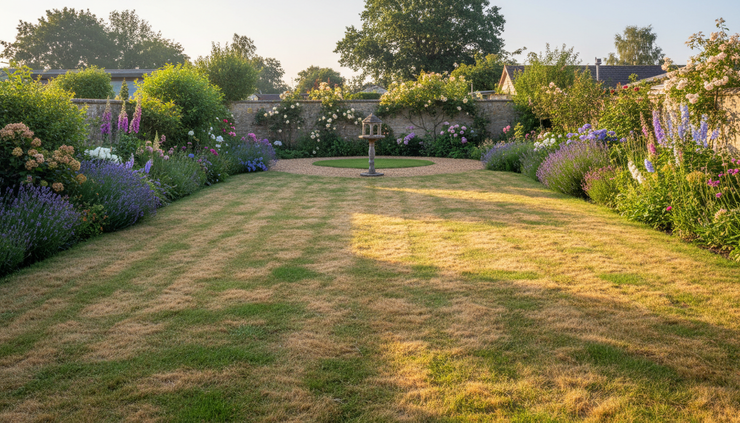
Lawns often recover well in autumn because cooler weather and rain reduce stress. If the grass has suffered from summer drought, heavy use, or moss, give it a gentle reset before cold weather settles in.
Rake out moss and thatch with a spring-tine rake if needed. Spike compacted areas with a garden fork, pushing the tines into the soil and rocking slightly to let in air. Brush sharp sand or a lawn top dressing into the holes if drainage is poor. Bare patches can still be sown in early autumn when the soil is warm and rain is likely, but seed needs enough mild weather to establish before winter.
Keep mowing while grass is growing, but raise the cutting height. Very short grass struggles in cold and wet conditions. Remove fallen leaves often, especially under trees, where shade and damp can thin the turf.
Ponds also need autumn care. Netting a pond before heavy leaf fall can save a lot of work. If leaves sink and rot, they can affect water quality. Remove excess blanket weed and dying foliage from pond plants, but leave material beside the pond for a day so small creatures can crawl back into the water.
Check pumps, fountains, and filters according to the maker’s instructions. If your pond is shallow and prone to freezing, a floating ball or pond de-icer can help keep a small air hole open during very cold spells. Never smash ice with force, as the shock can harm pond life.
Autumn is also the right time to walk around the garden and check what will face winter weather.
Look at fences and gates. Tighten loose screws, replace broken panels, and make sure posts are sound. It is easier to fix a wobbling fence in October than after a storm in January.
Clean and store summer furniture. Wash pots that held diseased plants, then let them dry before stacking. Empty saucers and trays so they do not fill with stagnant water. Put away lightweight arches, plant supports, and decorations that could blow around in high winds.
Greenhouses and cold frames deserve a proper clean. Remove old grow bags, dead leaves, and weeds under staging. Wash glass to let in as much winter light as possible. Good hygiene now reduces pests and diseases next year.
Plant, move, and divide while the soil is still warm
Many plants establish well in autumn because their roots keep growing after top growth slows. The soil holds warmth from summer, and regular rain helps them settle without constant watering. This makes autumn one of the best times to plant hardy perennials, shrubs, trees, hedging, and spring bulbs.
Plant spring bulbs before the ground becomes too cold or waterlogged. Daffodils, crocus, alliums, muscari, and hyacinths can go in during autumn. Tulips are often planted later in autumn, which can help reduce problems with disease. Choose firm bulbs with no mould or soft patches.
As a rough guide, plant bulbs at about two to three times their own depth, with the pointed end up. If you are not sure which way is up, plant them on their side and they usually sort themselves out. Add grit under bulbs in heavy soil to improve drainage.
Hardy perennials can be divided when they have finished flowering. Lift congested clumps of plants such as hardy geraniums, daylilies, hostas, astrantia, and ornamental grasses. Split them with two forks back to back, a spade, or an old bread knife for dense roots. Replant the healthiest outer pieces and compost the tired centre.
Autumn is also a good season for moving shrubs that are in the wrong place, as long as they are not too large. Water well the day before, dig a generous rootball, and replant at the same depth. Firm gently and water again. A mulch around the base helps roots recover.
Bare-root plants arrive during the dormant season. That includes many roses, fruit bushes, hedging plants, and trees. They are often better value than pot-grown plants and establish well if planted correctly. Soak the roots before planting, spread them out in the hole, and avoid leaving them exposed to wind.
Do not forget containers. Remove tired summer bedding and refresh compost before autumn and winter planting. Violas, pansies, cyclamen, heuchera, small grasses, ivy, and spring bulbs can make pots that carry colour through colder months.

Harvest, prune, and protect productive plants
Autumn brings the last main harvests from many edible gardens. Pick apples and pears when they lift and twist easily from the branch. Store unblemished fruit somewhere cool, dark, and airy. Use bruised fruit first.
Lift maincrop potatoes on a dry day if possible. Let the skins dry briefly before storing them in paper or hessian sacks away from light. Green potatoes should not be eaten. Pull beetroot, carrots, and other roots as needed, or leave hardy crops in the ground if your soil does not become waterlogged.
Clear spent vegetable plants once they have finished cropping. Compost healthy material and remove diseased foliage. Old tomato and potato plants can carry blight, so treat them with care if they show signs of infection.
Some crops can still be sown or planted in autumn. Garlic usually does well when planted before winter, as many varieties need a cold period to form good bulbs. Autumn onion sets and broad beans can also be started in suitable areas and soils. In colder or wetter gardens, it may be better to wait until spring or use modules under cover.
Pruning needs a careful approach. Many shrubs do not want heavy pruning in autumn because fresh cuts can be vulnerable to frost, and some flower on old wood. Still, there are useful jobs you can do.
Cut back raspberry canes that have fruited, depending on whether they are summer or autumn varieties. Remove dead, damaged, or crossing branches from fruit bushes if the plant is dormant and the weather is mild. Shorten long rose stems slightly if they might rock in winter winds, but save main pruning for late winter.
Climbing plants may need tying in before storms. Check wires, trellis, and wall supports. Tie growth with soft garden twine, leaving room for stems to expand. Remove anything dead or clearly diseased.
Protect tender productive plants before the first hard frost. Move citrus, tender herbs, chillies, and pelargoniums under cover if you want to keep them. A bright frost-free greenhouse, porch, or windowsill can work, depending on the plant. Reduce watering as growth slows.
Prepare for frost, rain, and winter wildlife
Winter damage often comes from a mix of cold, wet soil, wind, and sudden temperature changes. Autumn preparation helps plants cope.
Raise pots onto feet or bricks so excess water can drain away. This matters most for terracotta pots, which can crack if saturated compost freezes inside them. Move vulnerable containers close to a house wall or into a sheltered corner. Grouping pots together gives them some protection from wind.
Wrap tender plants with horticultural fleece when frost is forecast. For bananas, tree ferns, and other exotic-looking plants, pack the crown with straw or dry leaves before wrapping, if that suits the plant. Keep covers breathable. Plastic can trap moisture and cause rot if left in place.
Add a dry mulch around borderline hardy plants, but do not bury the crown. In wet areas, drainage can matter more than warmth. Alpines and Mediterranean herbs such as lavender, rosemary, and thyme often dislike sitting in cold, wet soil.
Wildlife-friendly autumn work is simple and rewarding. Put up bird feeders before the coldest weather, then clean them regularly. Leave berries on shrubs where possible. Make a small log pile in a quiet corner. A shallow dish of water helps birds and mammals when natural sources freeze.
Hedgehogs may shelter in leaf piles, compost heaps, or long grass. Check carefully before strimming, cutting back, or turning heaps. If you plan to have a bonfire, build it on the day you light it, or move the pile first, so animals do not get trapped inside.
Tools also deserve attention before winter. Clean soil from spades, forks, hoes, and trowels. Sharpen secateurs and loppers. Wipe metal parts with a little oil to reduce rust. Store tools dry. Drain hoses and put them away before freezing weather arrives.

A simple autumn garden checklist
Autumn gardening feels easier when it is broken into steady weekend jobs. Work with the weather and avoid walking on borders or lawns when they are waterlogged.
Use this checklist as a practical guide:
Job | Best reason to do it |
Rake leaves from lawns and paths | Prevents slippery surfaces and weak grass |
Make leaf mould | Turns fallen leaves into free soil conditioner |
Clear diseased plant material | Reduces problems carrying over into next year |
Mulch borders | Protects soil and feeds soil life |
Plant spring bulbs | Creates early colour after winter |
Divide crowded perennials | Renews plants and fills gaps for free |
Clean the greenhouse | Improves light and reduces pests |
Raise pots off the ground | Helps drainage and reduces frost damage |
Check fences and supports | Prevents storm damage |
Clean and sharpen tools | Makes spring jobs easier |
The best autumn gardens are not spotless. They are cared for, prepared, and full of small pockets of life. Clear what could cause harm, feed the soil, plant for the months ahead, and leave enough stems, leaves, berries, and shelter for wildlife. Do that, and spring will not feel like starting again from scratch.
Comments