


How to Help Your Lawn Recover After a Heatwave

A lawn can look ruined after a run of hot, dry weather, only to surprise you a few weeks later with fresh green shoots. That first change from straw-coloured and brittle to soft and living again is one of the most welcome sights in the garden.
After the heatwave across the south east of England, many lawns have been under real stress. Some turned patchy, some went completely brown, and others stopped growing almost overnight. The good news is that grass is tougher than it looks. With cooler days, more moisture in the soil and a little sensible care, many lawns will recover naturally.
The key is not to rush it. A lawn coming out of heat stress needs support, not shock. Cutting too low, feeding at the wrong time or watering lightly every day can slow recovery rather than help it. A gentler approach gives the grass the best chance to thicken up again before autumn and winter arrive.
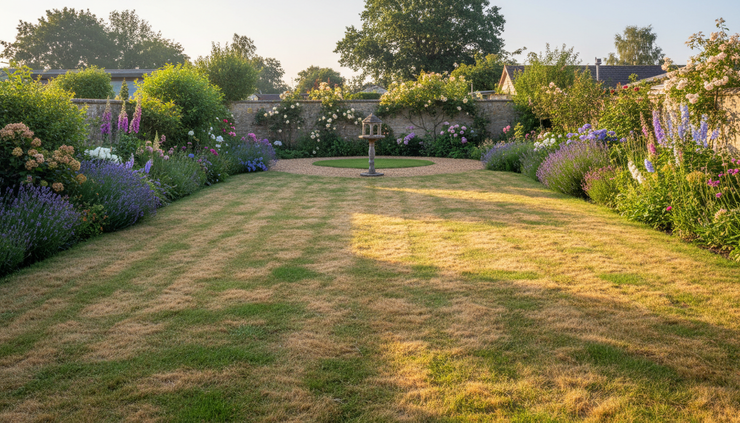
Why lawns turn brown after hot, dry weather
When the weather turns hot and dry for a long spell, grass often goes dormant. This is a natural survival response. Instead of putting energy into fresh growth, the plant slows down and protects its crown and roots. The leaves turn brown, the surface feels dry, and the lawn can look far worse than it really is.
In many cases, the grass is not dead. It is waiting for conditions to improve.
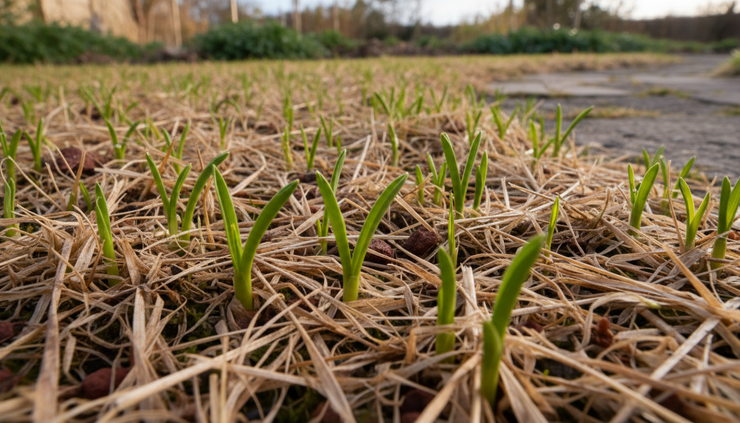
This is why lawns often begin to green up quickly after rain. Once moisture reaches the root zone and temperatures settle, the grass starts growing again. New shoots appear, colour returns, and bare-looking areas may begin to fill in.
Heat stress can still leave some damage behind, especially where the lawn has shallow roots, compacted soil or heavy foot traffic. These areas may recover more slowly. South-facing lawns, slopes, thin soils and exposed gardens often suffer most because they dry out faster.
Common signs of heat stress include:
A straw-coloured or pale brown surface
Grass that feels crisp underfoot
Slower mowing growth
Thin patches where the soil shows through
Footprints that remain visible for longer
Weeds taking advantage of weak areas
A lawn also struggles more if it was cut too short before or during the heatwave. Short grass has less leaf area to make energy, and the soil beneath it dries out faster. That is why mowing height matters so much during recovery.
The encouraging part is that a tired lawn can improve a great deal with steady care. You do not need to do everything at once. In fact, doing less, at the right time, often works better.
Start recovery with careful mowing
Mowing is one of the simplest ways to improve a recovering lawn, but it is also one of the easiest jobs to get wrong after a heatwave.
The main rule is simple: do not cut the grass too short.
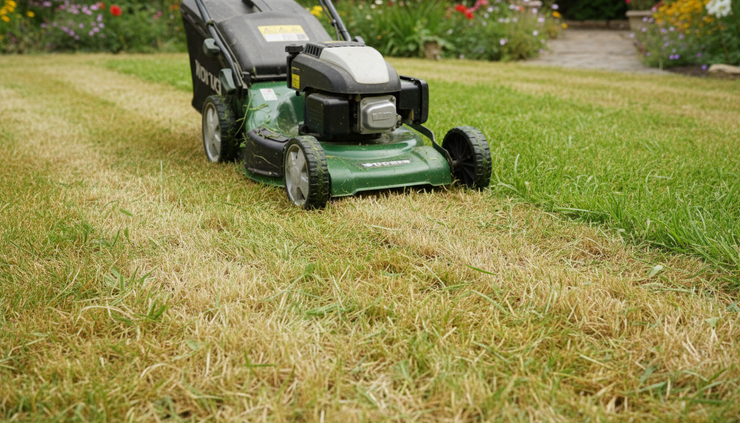
When the lawn starts growing again, raise the mower height. Taking off a small amount protects the plant and leaves enough blade to keep producing energy. This helps the lawn rebuild strength above and below the surface.
A close cut may look neat for a day or two, but it can weaken grass that is already under pressure. It also opens the lawn up to moss, weeds and further drying.
A better approach is to mow little and often once growth has restarted. Wait until the grass is actively growing and the ground is suitable. If the lawn is still dry, brittle or barely moving, give it more time. If the ground is very wet after heavy rain, avoid mowing until conditions improve, as wheels can smear the surface and compact the soil.
When mowing a lawn after heat stress, keep these points in mind:
Set the mower higher than usual while the grass recovers
Avoid removing more than a small amount of growth in one cut
Keep mower blades sharp so they cut cleanly
Do not mow during the hottest part of the day
Stay off very wet soil to avoid damage
Change direction from time to time to reduce wear patterns
Sharp mower blades make a real difference. Dull blades tear rather than cut, leaving ragged tips that can brown off quickly. A clean cut helps the lawn look healthier and reduces stress on the plant.
If growth has become uneven, resist the urge to “level it out” in one go. Bring the lawn back into shape over two or three cuts. It may look slightly longer than usual for a short while, but that extra length protects the recovering grass.
Water deeply when the lawn needs it
Watering can help a heat-stressed lawn recover, but the way it is done matters.
Light watering every day encourages shallow roots. The surface gets damp, but moisture does not sink far enough into the soil. Grass then becomes more dependent on frequent watering and less able to cope with future dry spells.
Deep, less frequent watering is better. It encourages roots to grow down into the soil, where moisture lasts longer. This helps the lawn become stronger and more resilient.
If rain has returned and the soil is moist, the lawn may not need extra watering at all. Before getting the hose out, check the ground. Push a trowel or hand fork into the soil and see whether moisture is reaching below the surface. A green lawn does not always need water, and overwatering can create its own problems.
When watering is needed, aim for:
Early morning watering where possible
A slow soak rather than a quick sprinkle
Enough water to reach the root zone
Less frequent watering rather than daily topping up
Avoiding waterlogged conditions
Early morning is usually the best time because less water is lost to evaporation, and the grass has time to dry during the day. Evening watering can be useful in dry spells, but if the lawn stays damp overnight too often, it may encourage fungal problems.
Pay close attention to newly repaired areas, turf or overseeded patches. These can dry out more quickly and may need more careful watering while they establish. Established lawns usually cope better once the roots are active again.
During periods of hosepipe restrictions, always follow local rules. If watering is limited, focus on the most stressed or recently repaired parts of the lawn rather than trying to keep every area perfect.
A healthy lawn does not need to look like a bowling green all year round. In a hot summer, some browning is normal. The aim is to help the lawn recover well once conditions improve.
Clear the surface so light and air can reach the grass
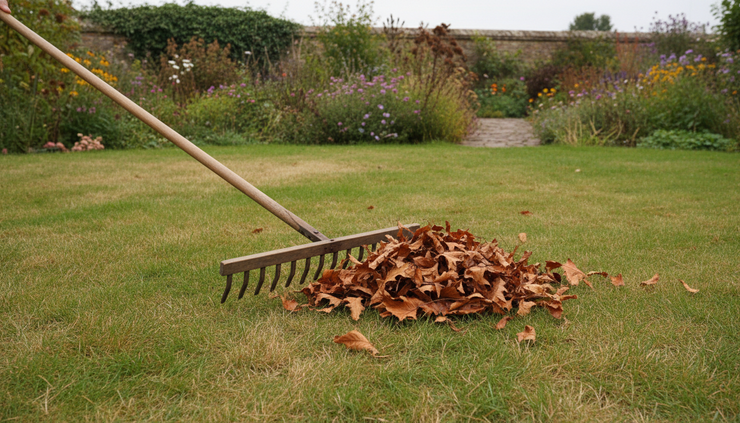
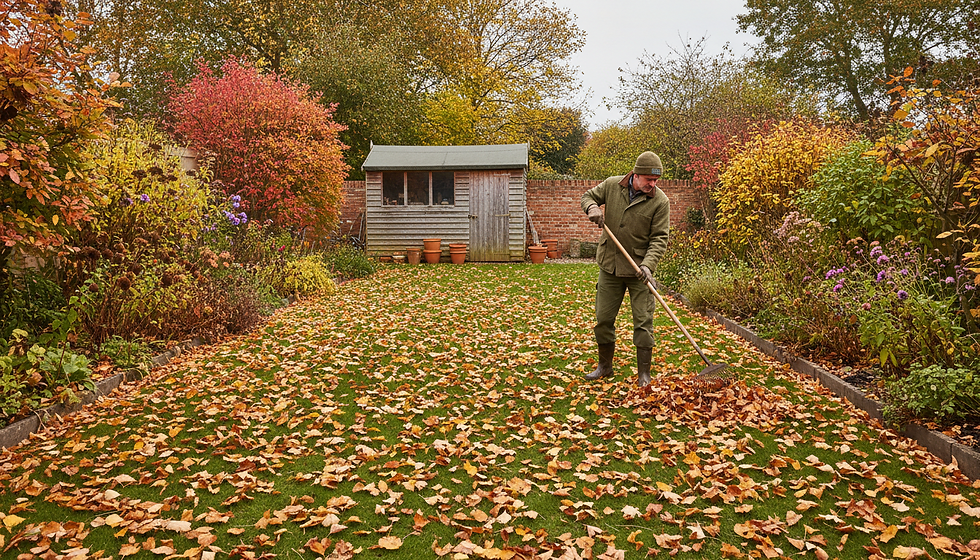
As summer moves towards autumn, leaves, twigs and garden debris can start to gather on the lawn. A small amount will not cause harm, but a thick layer blocks light and traps moisture against the grass.
Recovering lawns need light, air and space to grow. Regularly clearing leaves helps new shoots develop and reduces the chance of weak, yellow patches forming underneath.
A leaf rake is usually enough for small gardens. For larger lawns, a mower with a collection box can pick up light leaf fall while giving the grass a gentle trim, as long as the ground is firm enough.
It is also a good time to look for thatch and moss. Thatch is the layer of dead grass stems and organic matter that can build up near the soil surface. A little is normal. Too much can stop water and nutrients reaching the roots properly.
Do not be too aggressive with a weak lawn. Heavy scarifying while the grass is still stressed can cause more harm than good. If the lawn has greened up and is growing strongly, autumn can be a suitable time for light renovation work. If it still looks thin and fragile, wait until it has more strength.
Compaction is another common issue after summer use. Children playing, garden furniture, pets and regular foot traffic can press the soil down. Compacted soil drains poorly when it rains and dries hard when the weather is hot. Grass roots then struggle to grow deeply.
Signs of compaction include:
Water sitting on the surface after rain
Hard ground that is difficult to push a fork into
Thin grass in well-used areas
Moss appearing in damp, worn patches
Aeration can help by opening up the soil. For small lawns, a garden fork can be used to make holes across compacted areas. For larger or heavily worn lawns, mechanical aeration may be better. This allows air, water and nutrients to move into the root zone.
Repair bare patches at the right time
Some lawns bounce back almost fully after rain. Others are left with bare patches where grass has died, worn away or thinned too much to fill in quickly.
Autumn is often a good time to repair these areas because the soil is still relatively warm and there is usually more moisture in the ground. Cooler conditions also reduce stress on new seedlings. Spring can work too, but autumn repairs often face less competition from weeds and less pressure from very hot weather.
Before repairing a patch, work out why it appeared. If the cause remains, fresh seed or turf may struggle again.
Bare patches can be caused by:
Long dry spells and heat stress
Pet urine
Heavy foot traffic
Poor soil
Grubs or pests
Disease
Shade from trees or buildings
Scalping from mowing too low
For small bare patches, overseeding is usually straightforward. Remove dead material, lightly loosen the surface and add a thin layer of suitable topsoil or lawn dressing if needed. Sow grass seed evenly, then press it into contact with the soil. Keep the area moist while it germinates, without washing the seed away.
For larger damaged areas, turfing may be a better option. Turf gives an instant green surface, but it still needs proper preparation and aftercare. The soil should be level, free-draining and prepared well before turf is laid. New turf then needs careful watering while it roots into the soil below.
Choose grass seed that suits the area. A sunny family lawn has different needs from a shaded side garden. Hard-wearing mixes are useful for busy gardens, while shade-tolerant mixes perform better under trees or near buildings.
Do not overseed and then mow too soon. Let the new grass establish first. When it is tall enough for its first cut, use a high setting and make sure the mower blade is sharp.
A repaired patch may look different from the rest of the lawn at first. With time, regular mowing and steady growth, it will blend in.
Get the whole garden ready for autumn
A recovering lawn is only one part of the garden. As the seasons change, the whole outdoor space benefits from a tidy and thoughtful reset.
Autumn is a practical time to prepare borders, shrubs, hedges and lawns for colder months. The goal is not to strip the garden bare. It is to remove what is no longer helping, support healthy growth and keep the space looking cared for.
Useful autumn garden jobs include:
Trimming untidy edges around the lawn
Clearing fallen leaves from grass and paths
Cutting back spent herbaceous plants where needed
Weeding borders before winter
Mulching beds to protect soil
Checking fences, sheds and garden structures
Planning lawn repairs, turfing or planting projects
A neat lawn edge can make a big difference, even if the grass is still recovering. It gives the garden a cared-for look while the lawn continues to thicken.
Borders also affect the health of the lawn. Overgrown plants can shade the edges, reduce airflow and leave damp areas where moss can take hold. Keeping borders tidy helps the whole garden breathe.
This is also a good time to think ahead. If a lawn struggled badly during the heatwave, it may be a sign that the soil needs attention, the grass mix is not suited to the garden, or regular maintenance needs adjusting. A lawn that is cut too short all year, rarely aerated or left covered in leaves will find extreme weather harder to handle.
At Oak & Grow Garden Care, we see how quickly gardens can change with the right seasonal care. Regular lawn mowing, garden maintenance, turfing and larger projects all play a part in keeping outdoor spaces healthy and enjoyable throughout the year.
Give your lawn time to come back properly
The most important thing after a heatwave is patience. A lawn that has been scorched by sun and dry weather will not always recover evenly, and it rarely improves overnight. Some areas will green up quickly. Others may need extra attention, repair or a full seasonal plan.
Focus on the basics first. Raise the mower height. Mow only when the grass is growing and the ground is suitable. Water deeply when it is needed. Clear leaves and debris so light and air can reach the grass. Repair bare patches when conditions are right.
These simple steps can make a tired lawn look much healthier as autumn sets in.
If your lawn is finally starting to green up again, enjoy that change. It is a sign that the garden is responding. And if some areas still look worn, patchy or beyond saving, help is available. For lawn mowing, maintenance, turfing and wider garden care, get in touch with Oak & Grow Garden Care and give your garden the support it needs for the season ahead.
Comments